
Moody's on Thursday raised India's GDP forecast for the calendar year 2020 upwards to -8.9 per cent contraction from -9.6 per cent contraction forecast earlier. Similarly, India's GDP forecast for the calendar year 2021 has been revised upwards to 8.6 per cent from 8.1 per cent projected earlier. The report released by Moody's Investors Service attributed the reason behind better growth to the falling of coronavirus cases in the country.

The ruble has recouped most of its losses and become the top-performing currency globally. It continues to gain and is up 60 per cent against the US dollar from its lows in the first week of March. The ruble appreciated to 83 to the dollar intraday on Tuesday against a record low of 139 on March 7.

The movement of prices in the international oil market and rupee-USD exchange rate shall continue to be monitored closely and developing trends of the market will be reflected in future price changes

IndusInd Bank was the top gainer in the Sensex pack, surging around 5 per cent, followed by Sun Pharma, Reliance Industries, Infosys, Kotak Bank and Tech Mahindra. On the other hand, HDFC, PowerGrid, Axis Bank, ICICI Bank, NTPC and L&T were among the laggards.

Only a few thousand chargers dot the Indian landscape, some in working condition, others not, with some held hostage to the power supply vagaries of local utilities, reports S Dinakar.

Companies that are developing biosimilars (for regulated markets) or have portfolio of new chemical entities (NCEs) under development.

Gold is usually seen as a safe-haven when stocks are falling or when inflation is rising. With prices of the yellow metal hovering near record highs, people are also putting off their jewellery purchases. Along with a subdued marriage season, the orders with price open and settled on delivery day, too, are getting cancelled. Apart from high, volatile prices, there is no gold rush yet for the safe-haven asset, crimping demand.

This optimism is triggered by the feel-good factor in the wake of the Sensex touching record-high levels last week and a slew of discount offers by airlines to boost travel demand.
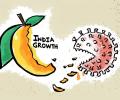
The International Monetary Fund (IMF) on Tuesday cut its economic growth forecast for India to 9.5 per cent for the fiscal year to March 31, 2022 as the onset of a severe second COVID-19 wave cut into recovery momentum. This forecast for 2021-22 is lower than the 12.5 per cent growth in GDP that IMF had projected in April before the second wave took a grip. For 2022-23, IMF expects economic growth of 8.5 per cent, larger than the 6.9 per cent it had projected in April.

There is money to buy the central public sector enterprises, but buyers will need a firm assurance that the disvestment programme will keep environment issues front and centre of their corporate plans.

The primary market is set for a bumper Rs 80,000-crore bonanza with 30 companies already filing IPO papers to raise Rs 55,000 crore, while around 10 more are lined up for this month itself, seeking to mop up another Rs 25,000 crore, say investment bankers. The market has been on a non-stop rally, hitting new records almost every week, on the back of an influx of investors -- a vast majority of them first-timers -- coupled with a flood of liquidity. Foreign funds alone had pumped in a record $35 billion into the market in FY21, while the trend has continued this fiscal as well. Domestic institutions led by LIC have also infused trillions of rupees, helping woo retail investors in troves -- the year saw over 20 million new investors coming to the market.

India's growth projection released by the latest World Economic Outlook remains unchanged from its previous WEO (World Economic Outlook) update of July this summer but is a three-percentage point in 2021 and 1.6 percentage point drop from its April projections. According to the latest WEO update, released ahead of the annual meeting of the IMF and the World Bank, the world is expected to grow at 5.9 per cent in 2021 and 4.9 per cent in 2022.

On Tuesday, Novartis agreed to buy GSK's oncology products business for $14.5 billion, while selling its vaccines business, excluding flu, to GSK for $7.1 billion.

Emerging markets such as India have always run higher inflation rates than developed economies such as the US and countries of Western Europe. But for the first time in the past 30 years, the US reported a higher consumer price inflation (CPI) rate than India in five consecutive months. The US reported a CPI rate of 7.5 per cent in January 2022 against 6.01 per cent in India and analysts expect the trend to continue for at least a few months more

With commodity markets remaining soft and uncertain, it is likely the money will flow into equity markets with strong upsides, such as India.

Quant funds have a very short track record, and have underperformed so far, reveals Sarbajeet K Sen.

India's economy could prove to be the "most resilient" in the subregion of South and South-West Asia over the long term, according to a report by the UN, which says a positive but lower economic growth post COVID-19 pandemic and the country's large market will continue to attract investments. The report titled 'Foreign Direct Investment Trends And Outlook In Asia And The Pacific 2020/2021', and compiled by United Nations Economic and Social Commission for Asia and the Pacific (UNESCAP), stated that inward FDI flows to South and South-West Asia slightly decreased by 2 per cent in 2019, from $67 billion in 2018 to $66 billion in 2019. The growth, however, was mainly driven by India, which accounted for 77 per cent of the total inflows to the subregion and received $51 billion in 2019, up 20 per cent from the previous year.

In the Mumbai domestic market, gold stood at Rs 30,000/10g, down 0.9 per cent, while silver fell 2.5 per cent to Rs 50,275 a kg.

Passenger vehicle market leaders Maruti Suzuki and Hyundai on Saturday reported a decline in wholesales in December 2021, although homegrown majors Tata Motors and Mahindra & Mahindra reported growth, amid semiconductor shortage continuing to impact production. Other manufacturers Nissan and Skoda also reported an increase in December 2021 sales although Honda Cars India witnessed a decline last month. The country's largest carmaker Maruti Suzuki India (MSI) reported a 4 per cent fall in wholesales to 153,149 units in December 2021 as against 160,226 units a year ago.

Recently, Suzuki Motor Corp (SMC) in an investor presentation expressed strong intent to enter the electric vehicle (EV) space. This is part of a larger strategy the Hamamatsu-based firm has drawn up in developing electrification of technologies as it seeks to achieve carbon neutrality. The significance of this presentation is that it marked the first time that the Japanese carmaker spelt out its EV strategy with well-defined timelines. SMC plans to develop electrification technologies by 2025, fully implement them in products from the same year, and make a full-scale quantitative increase from 2030.
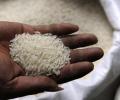
A 6-7 million tonnes shortfall in rice production due to a fall in paddy sowing area is likely to keep rice prices at elevated levels, adding to the inflationary pressure that the slowing economy is already grappling with. Elevated food prices, including that of cereals, had led to retail inflation reversing a three-month declining trend, to touch 7 per cent in August. Similarly, the wholesale price inflation, which declined to 11-month low, also showed price pressures from cereals resulting from wheat output being impacted by severe heat waves in some parts of the country.

Enthused by rising potato prices after a prolonged slump, Pradeep Sharma was planning to sow the crop on his 15-acre farm near Agra slightly earlier than usual. The delayed departure of the southwest monsoon also prompted his decision, since the good soil moisture would have saved at least one initial irrigation. But the acute shortage of diammonium phosphate (DAP), a crucial nutrient ahead of the sowing season for potatoes, nipped those hopes in the bud. DAP is the second-most used fertiliser in the country after urea.

A significant 69% respondents indicated keen interest to travel in 2021 post ease in restrictions with 18% ready to travel immediately post unlock and 51% within 3-6 months.

After a better-than-expected Dussehra weekend, hospitality firms are hopeful of ending the year on a positive note by doing good business over Christmas and the New Year. Typically, year-end bookings kick in two to four weeks before the season begins. Owing to pandemic-related uncertainties, hotels are seeing a significant reduction in the booking window, with travellers waiting till the last minute to make hotel reservations.
'We will likely be buffeted by tailwinds from the global economy, geopolitical shifts and robust domestic demand.'

In the future, publishers will need to think of digital immersive marketing just like marketing a movie or show on Netflix is an immersive experience.

Foreign Direct Investment into India rose by 13 per cent in 2020, boosted by interest in the digital sector, and while fund flows "declined most strongly" in major economies such as the UK, the US and Russia due to the Covid-19 pandemic, India and China "bucked the trend", the UN has said.

This is the second increase in rates of petrol this month while in case of diesel it wipes away a part of the hike effected earlier this month
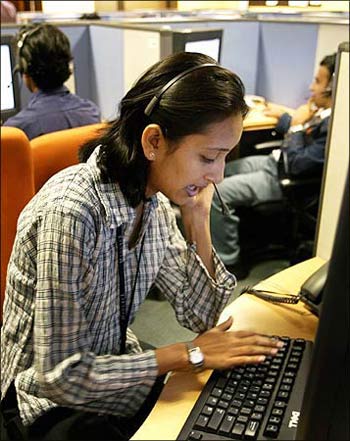
There has also been a shift from hiring freshers to those with two to five years' experience.

Global chip maker Intel on Monday said it could take a couple of years to address the supply shortage in the semiconductor ecosystem that is witnessing huge demand for tech products, accelerated by the COVID pandemic. Intel CEO Pat Gelsinger noted that the work and study-from-home trends during the COVID-19 pandemic have led to a "cycle of explosive growth in semiconductors" that has placed huge strain on global supply chains around the world. "We have been working diligently with our partners... to address constraints and increase output to meet demand, and we are acting to help ensure capacity to meet the world's needs for this new era... But, while the industry has taken steps to address near-term constraints, it could still take a couple of years for the ecosystem to address shortages of foundry capacity, substrates and components," he said at a virtual session at the Computex event.

'Nobody is talking about the inequality that is going to come.'

The partnership will look to expand Ford's reach in the fast-growing Indian market and improve M&M's access to global markets

The analyst community tracking the Indian IT services industry took special note of Accenture's first quarter (Q1) performance, which showcased the rapid growth of its consulting business that outperformed its outsourcing business. Bookings indicate that the trend will continue. Consulting bookings increased 41.6 per cent year-on-year (yoy) to $9.4 billion, higher than the 17.6 per cent growth in outsourcing to $7.4 billion. The management commentary was also more bullish on the consulting business.

Rising prices of international coal - both coking and thermal - used in the making of ferrous and non-ferrous metals, respectively, are expected to have an impact on margins of metals companies in July-September quarter (Q2) as steel companies may see margins getting eroded, while the base firms could stand to benefit, said brokerages.

Actual reduction in price will be more after taking into account local VAT.

Close to half a dozen more three-row premium mid-size models are expected to hit the road over the next two years.

Cancellation of at least Rs 3,000-crore worth of business has happened in the past few weeks.

Investors pumped Rs 491 crore in gold exchange traded funds (ETFs) in February as they seem be taking advantage of the lower domestic prices caused due to declining international rates, appreciating rupee and reduction in custom duty. This came following a net investment of Rs 625 crore in January and Rs 431 crore in December. Prior to this, gold ETFs had seen an outflow of Rs 141 crore in November, data available with Association of Mutual Funds in India showed.
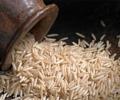
Following the outbreak, Iran has stopped Indian basmati shipments. This has led to exports already falling 18-20 per cent this fiscal year. Iran and the rest of West Asia account for the largest imports of Indian basmati, and comprise more than 30 per cent of the shipments.

Fitch Solutions sees RBI keeping benchmark interest rates unchanged during the fiscal to March 2022 following its decision to buy Rs 1 lakh crore of government bonds. "We had initially expected another policy rate cut to arrest the rise in government bond yields since the Union Budget announcement in February. "However, having an explicit bond purchase guidance from the RBI following the announcement of the G-SAP will also achieve a similar effect, if not even be more effective than a rate cut on capping the increase in bond yields," it said in a note. The Reserve Bank of India (RBI) held its policy repurchase (repo) rate unchanged at 4 per cent at its monetary policy meeting on April 7.
